




Call Us
Office Hours
Monday
10:00 am - 7:30 pm
Wednesday
10:00 am - 7:30 pm
Friday
10:00 am - 7:30 pm
Saturday
10:00 am - 3:00 pm
Please enter your zip code or city, state below for door-to-door directions.

Advances in dental materials and techniques have made replacing missing teeth more predictable and natural-looking than ever. While dental implants and fixed bridgework provide long-term, anchored options for tooth replacement, removable dentures remain an important, reliable choice for many patients who want to restore function and appearance without invasive procedures.
At the office of Zhukovsky Dental, we design dentures using high-quality materials and a careful clinical approach to create comfortable, stable restorations that support speech, chewing, and facial contours. Our process emphasizes fit, esthetics, and predictable function so patients can feel confident with their new smile.
We focus on individualized care that respects each patient’s goals and oral health. Whether you’re replacing a single tooth area with a partial denture or rebuilding a full arch, the practice provides thorough evaluations and prosthetic solutions tailored to your needs.
Tooth loss affects far more than the look of your smile. When teeth are missing, chewing patterns change and certain foods become harder to eat, which can affect nutrition and enjoyment of meals. Speech can also be altered, especially when front teeth are involved, creating practical frustrations in social and professional settings.
Over time, missing teeth allow neighboring teeth to drift, tipping into open spaces and creating bite problems that can be harder to correct later. Bone and soft tissue under the missing tooth begin to remodel, which may alter facial support and lead to a sunken or narrowed appearance if teeth are not replaced.
Addressing tooth loss proactively helps preserve remaining dental structures, maintain facial proportions, and restore confidence. Dentures—both partial and complete—offer a way to return essential function and protect the long-term health of the mouth when selected and fitted with appropriate clinical planning.
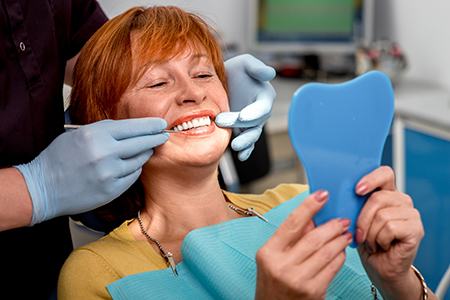
Dentures are removable prosthetic appliances made to replace missing teeth and the surrounding gum tissue. They consist of artificial teeth set in a base that rests on the gums and, when properly made, restores chewing surfaces and supports facial musculature to improve appearance and comfort.
One of the primary advantages of removable dentures is their versatility: they can replace one or many teeth and are designed to be taken out for cleaning and overnight rest. That removability also allows clinicians to monitor the health of the supporting tissues and any remaining teeth more easily than with some fixed restorations.
Modern denture materials and laboratory techniques enable natural-looking tooth shapes and shades, improved fit, and lighter, stronger bases. Dentures can be made to blend with your existing teeth and facial features, providing a discreet and functional solution to tooth loss.
There are several denture styles to meet different clinical needs. The two broad categories are complete (full) dentures, which replace all teeth in an arch, and removable partial dentures, which replace some teeth while integrating with the remaining natural dentition. The right choice depends on the number of missing teeth, the condition of the remaining teeth, and the health of the gums and bone.
Complete dentures restore an entire upper or lower arch and can be crafted as conventional prostheses after healing from extractions, or as immediate prostheses that provide teeth right away following removal. Immediate dentures are designed to minimize the time a patient is without teeth, though they may require adjustments as tissues heal and reshape.
Partial dentures are designed to fill gaps left by one or several missing teeth and typically secure to adjacent teeth using clasps or precision attachments. Modern partials can be built with cast metal frameworks, flexible resins, or hybrid materials that balance strength, comfort, and esthetics.
Complete dentures rely on the fit between the denture base and the gums for retention, and are carefully contoured to support lip and cheek tissues. Proper jaw relationships, tooth position, and careful contouring of the denture base are essential to achieve stable function and a natural appearance.
An immediate denture provides an expedient solution after extractions, while an overdenture gains added support from retained tooth roots or attachments to implants. Implant-retained dentures attach to small implants for enhanced stability and reduced movement during chewing or speaking, offering a hybrid approach that keeps the appliance removable but firmly seated.
Partial frameworks are selected based on patient needs: cast metal frameworks offer strength and thin profiles, flexible resins enhance comfort for some patients, and precision attachments can improve esthetics by eliminating visible clasps. The design is customized so the denture preserves adjacent teeth and prevents unwanted shifting.
At Zhukovsky Dental, our goal is to match each patient with the denture type that best balances comfort, function, and long-term oral health, taking into account remaining teeth and personal preferences.
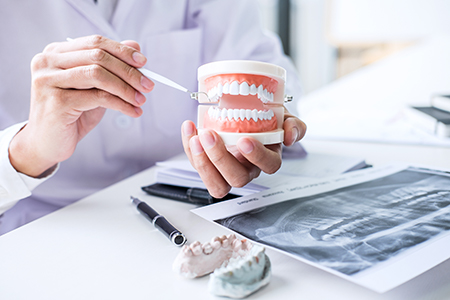
Fabricating a denture is both a clinical and an artistic process. It begins with a comprehensive evaluation that includes medical and dental history, an intraoral exam, and diagnostic imaging when needed. A successful outcome depends on accurate impressions, precise jaw records, and communication about the ideal tooth shape and shade for each patient.
Laboratory fabrication involves multiple stages: creating a stable base, arranging teeth to reestablish bite and esthetics, and performing trial fittings to refine fit and function. These steps allow adjustments prior to final processing so the denture will sit comfortably and support normal speech and chewing patterns.
In some cases, preliminary procedures—such as extractions, minor soft-tissue reshaping, or ridge preservation—improve the foundation for a denture and enhance long-term comfort. When implants are part of the plan, their placement is coordinated with prosthetic needs to achieve optimal support for implant-retained appliances.
Adjusting to a new denture is a process that varies from person to person. In the first days or weeks, it’s normal to notice increased saliva production and to experience mild soreness as tissues adapt to the appliance. Most patients become comfortable with everyday activities—talking, smiling, and eating—after a short adaptation period.
Speaking clearly with a new denture often improves as the tongue and lips learn new patterns; practicing reading aloud or repeating common words can accelerate this adjustment. Eating should begin with soft, easy-to-chew foods and progress to firmer textures as confidence and function return.
Proper daily care helps maintain the denture and oral tissues. Rinse the appliance after meals, brush it gently with a denture brush, and soak it overnight in water or the recommended denture cleaner. Also continue cleaning any remaining natural teeth and gums to protect oral health and prolong the fit of the denture.
Follow-up and adjustments
Minor adjustments and relines are a normal part of long-term denture care as the shape of the supporting tissues changes. Regular checkups allow the clinician to monitor fit and oral health and to make any necessary refinements.
Improving retention
Some patients benefit from adhesives or from attachments and implants that increase stability. The best approach is determined by clinical assessment and individual preferences for retention and removability.

Long-term success with dentures depends on routine care and periodic professional evaluations. Over time, natural changes in the jaw and gum contours may require relines, repairs, or adjustments to maintain fit and function. Addressing fit issues early prevents soreness and preserves tissue health.
It’s also important to monitor the condition of any remaining natural teeth and surrounding tissues. Regular oral exams help identify changes that could affect the denture’s fit or the overall health of the mouth, so timely care can be provided when needed.
By combining attentive clinical follow-up with good at-home hygiene, patients can enjoy comfortable, functional dentures that support daily life and appearance for years.
If you have questions about replacing missing teeth, need help choosing between denture options, or would like to learn more about what to expect during the process, please contact us for more information. Our team is happy to discuss how we can help restore your smile and oral function.
Dentures are removable prosthetic appliances designed to replace missing teeth and the surrounding gum tissue. They consist of artificial teeth set in a gum-colored base that rests on the oral tissues and restores chewing surfaces and facial support. When properly fabricated and fitted, dentures help patients chew more effectively, speak more clearly and regain a natural appearance.
Modern denture materials and laboratory techniques produce lifelike tooth shapes and improved fit, while removable designs allow clinicians to monitor oral tissues and remaining teeth during regular examinations. With careful clinical planning, dentures can protect oral health and improve day-to-day function for many patients.
Common denture types include complete (full) dentures that replace an entire arch, partial dentures that fill gaps left by one or several teeth, and immediate dentures that are placed at the time of extractions. There are also overdentures that gain support from retained roots or implants and implant-retained removable dentures that attach to small implants for added stability. Each style serves different clinical needs and offers trade-offs in retention, maintenance and tissue support.
The best choice depends on the number and location of missing teeth, the health of remaining teeth and gums, jawbone volume and the patient's preferences for removability versus fixed options. A thorough clinical evaluation and discussion of functional goals will determine which denture type balances comfort, esthetics and long-term oral health.
Fabrication begins with a comprehensive evaluation that includes medical and dental history, oral examination and, when indicated, diagnostic imaging. Accurate impressions, jaw records and careful tooth selection guide laboratory steps that include creating a stable base, arranging teeth for proper bite and esthetics, and completing trial fittings to refine fit and function. This staged approach helps ensure the final prosthesis supports normal speech and chewing patterns.
At the office of Zhukovsky Dental, clinicians coordinate any necessary preliminary care—such as extractions or soft-tissue adjustments—with prosthetic planning so the denture foundation is optimized. Communication between the clinical team and the dental laboratory is essential to achieve the fit, appearance and comfort patients expect.
Adjusting to new dentures is a gradual process that varies by patient. In the first days or weeks it is common to experience increased saliva production, mild soreness and temporary changes in speech as the oral tissues adapt to the appliance. These symptoms generally diminish with consistent wear, short practice sessions for speaking and stepwise progression of foods.
Follow-up visits are important during the adjustment period to address pressure points, refine the bite and make minor adjustments that improve comfort. If persistent pain or looseness occurs, patients should return for evaluation so relines or other refinements can be performed to restore proper fit and function.
Daily care begins with rinsing the denture after meals to remove food particles and gentle brushing with a soft brush to keep surfaces clean. Use a nonabrasive denture cleanser or a soft-bristled toothbrush and warm water, and avoid hot water that can warp acrylic bases. When not worn, most dentures should be kept moist by soaking overnight in water or a recommended denture solution to maintain their shape.
It is also essential to continue caring for any remaining natural teeth, gums and oral tissues by brushing, flossing and attending regular dental checkups. Professional examinations allow clinicians to assess tissue health, check fit and perform relines or repairs when needed to maintain comfort and function.
Dentures can initially change chewing patterns and speech because the tongue and lips must learn new positions relative to the prosthetic teeth. Eating should begin with soft, easy-to-chew foods cut into small pieces and progress to firmer textures as comfort and confidence return. Chewing on both sides of the mouth, taking smaller bites and avoiding sticky or very hard foods during the early period help reduce dislodgment and soreness.
Speech typically improves with practice; reading aloud, repeating difficult words and speaking slowly can accelerate the adjustment. If persistent speech difficulties or instability continue, an evaluation can determine whether adjustments, relines or alternative retention methods would improve function.
Implant-retained dentures attach to small dental implants that act as anchors in the jaw, providing increased stability and reduced movement during chewing and speaking. Overdentures can use retained tooth roots or implants to support the prosthesis and preserve bone levels better than conventional dentures alone. These hybrid approaches are attractive for patients seeking improved retention while retaining the ability to remove the prosthesis for cleaning.
Ideal candidates are evaluated for adequate bone volume, general health and oral hygiene commitment, since implant placement requires surgical planning and ongoing maintenance. A careful consultation will determine if implant-retained or overdenture solutions are clinically appropriate and how they compare to other restorative options for long-term function.
Routine follow-up visits are important to monitor oral tissues, evaluate denture fit and check any remaining natural teeth. Many patients benefit from an initial series of appointments after denture delivery, followed by periodic annual or semiannual reviews depending on tissue changes and clinical findings. Over time, normal bone and gum remodeling can alter the denture foundation and lead to looseness or pressure spots.
Relines, rebasing or repairs are common maintenance procedures that restore fit and function without replacing the entire prosthesis. Prompt attention to cracks, fractures or persistent soreness helps prevent sores and preserves tissue health, so patients should seek evaluation when problems arise.
Partial dentures are designed to fill spaces left by missing teeth and often incorporate clasps or precision attachments to integrate with remaining teeth. By preventing adjacent teeth from drifting into open spaces, well-designed partials help maintain proper bite relationships and reduce the risk of malocclusion. They can also distribute chewing forces across a broader area, which may protect vulnerable teeth from undue stress.
Design choices—such as cast metal frameworks, flexible resins or precision attachments—are made to balance strength, comfort and esthetics while preserving neighboring teeth. Ongoing hygiene and regular dental care remain essential to protect the health of the supporting teeth and tissues that anchor the partial denture.
Choosing between dentures, fixed bridges or implant-supported restorations depends on clinical factors and personal goals, including the number of missing teeth, jawbone volume, the condition of adjacent teeth and overall health. Dentures are often the preferred option when multiple teeth are missing or when a noninvasive, removable solution is desired, while implants and fixed bridges may be favored for long-term stability in suitable candidates. A careful assessment of function, esthetics and maintenance requirements will help clarify which approach best meets a patient's needs.
A consultation at Zhukovsky Dental can provide a personalized treatment plan that compares the benefits and clinical considerations of each option in the context of a patient's oral health and lifestyle. This collaborative evaluation ensures the chosen solution supports comfort, appearance and long-term oral function.
Please enter your zip code or city, state below for door-to-door directions.